Honestly, as a German I can not quite understand the obsession of the English speaking world with the question whether a word exists or not. If you have to express something for which there is no word, you have to make a new one, preferably by combining well-known words, and in the very same moment it starts to exist. Agree?
Deutsche Freunde, could you please create for me a word for the extreme depression I feel when I bend down to pick up a piece of litter and discover two more pieces of litter?
um = around
die Welt = world
die Umwelt = environment
ver = prefix to indicate something difficult or negative, a change that leads to deterioration or even destruction that is difficult to reverse or to undo, or a strong negative change of the mental state of a person
der Müll = garbage, trash, rubbish, litter
-ung = -ing
die Vermüllung = littering
ver- = see before
zweifeln = to doubt
-ung = see before
die Verzweiflung = despair, exasperation, desperation
die Umweltvermüllungsverzweiflung = …
This is a german compound on the spot master class and I am LIVING
Now here is the real entomology etymology question worth debating. Does “bugs” as a general term refer to only to terrestrial arthropod groups (insects, arachnids, myriapods, woodlice etc.), or is it more of a sunonym for creepy crawly and things like snails and worms also can be described as “bugs”
Someone needs to make an alignment chart for what people consiter bugs cause it could be anything from “"hemipterans are the only bugs” to “technically a human infant is a bug”
old people really need to learn how to text accurately to the mood they’re trying to represent like my boss texted me wondering when my semester is over so she can start scheduling me more hours and i was like my finals are done the 15th! And she texts back “Yay for you….” how the fuck am i supposed to interpret that besides passive aggressive
Someone needs to do a linguistic study on people over 50 and how they use the ellipsis. It’s FASCINATING. I never know the mood they’re trying to convey.
I actually thought for a long time that texting just made my mother cranky. But then I watched my sister send her a funny text, and my mother was laughing her ass off. But her actual texted response?
“Ha… right.”
Like, she had actual goddamn tears in her eyes, and that was what she considered an appropriate reply to the joke.I just marvelled for a minute like ‘what the actual hell?’ and eventually asked my mom a few questions. I didn’t want to make her feel defensive or self-conscious or anything, it just kind of blew my mind, and I wanted to know what she was thinking.
Turns out that she’s using the ellipsis the same way I would use a dash, and also to create ‘more space between words’ because it ‘just looks better to her’. Also, that I tend to perceive an ellipsis as an innate ‘downswing’, sort of like the opposite of the upswing you get when you ask a question, but she doesn’t. And that she never uses exclamation marks, because all her teachers basically drilled it into her that exclamation marks were horrible things that made you sound stupid and/or aggressive.
So whereas I might sent a response that looked something like:
“Yay! That sounds great – where are we meeting?”
My mother, whilst meaning the exact same thing, would go:
‘Yay. That sounds great… where are we meeting?”
And when I look at both of those texts, mine reads like ‘happy/approval’ to my eye, whereas my mother’s looks flat. Positive phrasing delivered in a completely flat tone of voice is almost always sarcastic when spoken aloud, so written down, it looks sarcastic or passive-aggressive.
On the reverse, my mother thinks my texts look, in her words, ‘ditzy’ and ‘loud’. She actually expressed confusion, because she knows I write and she thinks that I write well when I’m constructing prose, and she, apparently, could never understand why I ‘wrote like an airhead who never learned proper English’ in all my texts. It led to an interesting discussion on conversational text. Texting and text-based chatting are, relatively, still pretty new, and my mother’s generation by and large didn’t grow up writing things down in real-time conversations. The closest equivalent would be passing notes in class, and that almost never went on for as long as a text conversation might. But letters had been largely supplanted by telephones at that point, so ‘conversational writing’ was not a thing she had to master.
So whereas people around my age or younger tend to text like we’re scripting our own dialogue and need to convey the right intonations, my mom writes her texts like she’s expecting her Eighth grade English teacher to come and mark them in red pen. She has learned that proper punctuation and mistakes are more acceptable, but when she considers putting effort into how she’s writing, it’s always the lines of making it more formal or technically correct, and not along the lines of ‘how would this sound if you said it out loud?’
the linguistics of written languages in quick conversational format will never not be interesting to me like it’s fascinating how we’ve all just silently learned what an ellipsis or exclamation mark implies and it’s totally different in different communities or generations or whatever
an edible cracker with just one side. mathematically impossible and yet here I am monching on it.
‘scuit’ comes from the french word for ‘bake’, ‘cuire’ as bastardized by adoption by the brittish and a few hundred years
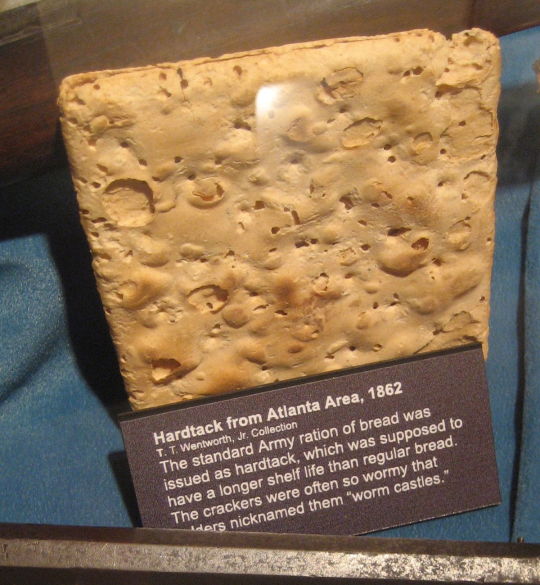
‘biscuit’ meant ‘twice-baked’, originally meaning items like hardtack which were double baked to dry them as a preservative measure long before things like sugar and butter were introduced. if you see a historical doccument use the word ‘biscuit’ do not be fooled to think ‘being a pirate mustve been pretty cool, they ate nothing but cookies’ – they were made of misery to last long enough to be used in museum displays or as paving stones
‘triscuit’ is toasted after the normal biscuit process, thrice baked
thus the monoscuit is a cookie thats soft and chewy because it was only baked once, not twice
behold the monoscuit/scuit
Why is this called a biscuit:
when brittish colonists settled in the americas they no longer had to preserve biscuits for storage or sea voyages so instead baked them once and left them soft, often with buttermilk or whey to convert cheap staples/byproducts into filling items to bulk out the meal to make a small amount of greasy meat feed a whole family. considering hardtack biscuits were typically eaten by dipping them in grease or gravy untill they became soft enough to eat without breaking a tooth this was a pretty short leap of ‘just dont make them rock hard if im not baking for the army’ but didnt drop the name because its been used for centuries and people forgot its french for ‘twice baked’ back in the tudor era, biscuit was just a lump of cooked dough that wasnt leavened bread as far as they cared
thus the buttermilk biscuit and the hardtack biscuit existed at the same time. ‘cookies’ then came to america via german and dutch immigrants as tiny cakes made with butter, sugar/molasses, and eggs before ‘tea biscuits’ as england knew them due to the new availability of cheap sugar- which is why ‘biscuit’ and ‘cookie’ are separate items in america but the same item in the UK
the evolution of the biscuit has forks on its family tree
It baffles and infuriates me that Hogwarts students don’t take Latin or Greek. Accio? Literally “I summon.” Lumos? Fucking “light.” Expelliarmus? Expel weapon!! Ooooh I wonder what Levicorpus does– you Dumb Ass Bastard. You ILLITERATE. It’s called Levicorpus, it lifts someone’s body, it LEVIES your goddamn CORPUS-








 tumblr backup